
Marina Georgiou
Clinical Physiotherapist & Home Assessment Lead
Marina answers families’ key questions about physiotherapy, home assessments, equipment, and supporting children and young people to feel safe, comfortable and confident.
01 Getting to know Marina
QCan you tell us a little about your role at Special People?
My role at Special People brings together two parts of care that I feel very strongly about: clinical physiotherapy and the reality of everyday life at home. As Clinical Physiotherapist and Home Assessment Lead, I look at how a child, young person or adult moves through their day, how they sit, stand, transfer, sleep, play, access the community, manage personal care and use any equipment that is already in place. My aim is not only to identify what is clinically needed, but to make sure the plan is practical, safe and realistic for the person, their family and the care team.
I first joined Special People in 2019 as a physiotherapist and support worker, working directly in residential settings with teenagers who had behavioural and emotional needs, learning disabilities and Down’s syndrome. That hands-on support worker background still shapes the way I practise today. It taught me that a care plan only works if it fits into real routines: busy mornings, tired evenings, school days, appointments, family pressures, moods, preferences and the small details that make a person feel secure.
Now, in my lead role, I use my physiotherapy training alongside that practical experience. I may be assessing posture and movement one moment, then speaking with parents, carers, schools, occupational therapists, GPs, wheelchair services or our own support workers the next. What matters most to me is joined-up care. Families should not feel that they are carrying everything alone; my job is to listen carefully, make clear recommendations and help everyone around the young person work towards the same goal: comfort, safety, confidence and more independence.
QWhat first drew you to paediatric physiotherapy?
My interest in physiotherapy started very personally. I was a professional volleyball player for many years, and like many athletes I experienced injuries, rehabilitation and the frustration of not being able to move or perform in the way I wanted. Physiotherapists helped me return to the sport I loved, but they also gave me something much bigger than treatment: confidence, patience and trust in my body again. That experience made me want to be part of the same profession and help other people improve their movement, health and quality of life.
During my physiotherapy training and early clinical experience in Greece, I worked with children with developmental delay, cerebral palsy and neurological conditions. That was where paediatrics became especially meaningful to me. With children, progress can be beautifully small and incredibly powerful. It might be a child tolerating a new position, reaching more easily for a toy, sitting with better comfort, taking a few steps, or a parent feeling more confident to support movement at home. Those moments stay with you.
Working at Special People deepened that interest even more. Supporting young people with learning disabilities, Down’s syndrome and emotional or behavioural needs helped me understand that paediatric physiotherapy is never just about muscles and joints. It is about communication, trust, family life, routines, sensory needs, motivation and dignity. Children teach you to be creative and patient. They also remind you that therapy must feel meaningful to them, not only to the professionals around them.
“With children, progress can be beautifully small and incredibly powerful.”
QWhat does a typical week look like for you?
Every week is different, and that is one of the parts of the role I enjoy most. A typical week may include home visits, physiotherapy assessments, reviewing seating or equipment, writing reports, updating care recommendations, speaking with families and liaising with other professionals. Some days are very clinical, focused on movement, posture, transfers, pain, strength, balance or mobility. Other days are more about problem-solving with families and carers so that the advice can be carried out safely between visits.
A home assessment might involve watching how a young person moves from their bedroom to the bathroom, how they sit for meals, how they transfer in and out of a chair, how safe the environment feels, and whether equipment is supporting them properly. I may also spend time with our support workers, making sure they understand safe handling techniques, positioning advice or exercise routines. Training the team is important, because children and young people do best when the people around them feel confident and consistent.
There is also a lot of communication behind the scenes. I may be speaking with occupational therapists about adaptations, with wheelchair services about seating, with schools about positioning during the day, or with GPs and other clinicians when a concern needs wider review. My week is a mixture of assessment, planning, education and reassurance. The best part is seeing recommendations turn into real improvements in daily life, not just a completed report, but a child sitting more comfortably, a transfer becoming smoother, or a family feeling that things are finally more manageable.
02 About home assessments
QWhat actually happens during a home assessment?
A home assessment is a chance for me to understand the person in the place where life actually happens. A clinic appointment can show us useful things, but the home tells a much fuller story. I can see how the young person moves around familiar spaces, where the difficult moments happen, what equipment is being used, how carers are supporting transfers, and what the family is managing day to day. It is not about judging the home or the family; it is about understanding the environment properly so that recommendations are realistic.
I usually begin by talking with the family and, wherever possible, the young person. I ask what is going well, what feels difficult, what has changed recently and what the family would most like help with. Then I observe everyday movements and routines. This may include sitting, standing, walking, stairs, transfers, moving in and out of bed, access to the bathroom, sleep positioning, play positions, use of mobility aids, seating, hoists or other equipment. I also think about comfort, fatigue, pain, skin pressure, posture, balance and safety.
Just as importantly, I look for strengths. Sometimes families are so used to coping that they do not realise how much they are already doing well. After the assessment, I explain what I have noticed and agree the next steps. That might be a few simple changes, a home exercise plan, safer-transfer advice, equipment recommendations, referrals to other services, or a written report for professionals involved. The goal is always the same: to make daily life safer, more comfortable and more manageable.
QHow can families prepare for the visit?
The most helpful thing families can do is to let me see a normal day. There is no need to tidy everything away, move furniture specially or make the house look perfect. In fact, I learn more when I see the usual routine, because that is what the recommendations need to fit into. If the hallway is narrow, if the bathroom is difficult to access, if equipment is usually kept in a certain corner, or if mornings feel rushed, those details matter. They help me understand the real picture.
It can be useful to have any current equipment available, such as a wheelchair, specialist chair, standing frame, walking aid, hoist, sling, splints or sleep system. If families have letters or reports from other professionals, for example from an occupational therapist, GP, consultant, school, wheelchair service or community therapy team - it helps to have those nearby too. A short list of the professionals involved can save time and makes it easier for me to coordinate advice afterwards.
I also encourage families to write down the things they most want to ask, even if they seem small. Sometimes the small things are exactly what affects family life most: getting dressed, bathing, car transfers, sitting for meals, getting comfortable at night, managing fatigue, or knowing whether a piece of equipment is still suitable. Children can also have familiar toys, music, snacks or comfort items nearby if that helps them feel relaxed. The visit works best when families feel able to be honest; there is no judgement, only support.
QWho else is usually involved, and how do you work with other professionals?
Good care is rarely the work of one person. A young person may have parents or family carers, support workers, school staff, occupational therapists, GPs, paediatricians, consultants, wheelchair services, equipment providers, social workers, care coordinators or community nurses involved. Each professional sees a different part of the picture. My role is to make sure the physiotherapy and home assessment advice connects with the wider plan rather than sitting separately.
For example, if I notice that a young person is struggling with seating, I may need to liaise with wheelchair services or an occupational therapist. If transfers are becoming unsafe, I may work with the care team and relevant professionals to review moving and handling. If a child is more tired, in pain, falling more often or avoiding a position they previously tolerated, I may suggest that the family discusses this with the GP or consultant. Communication is very important, because families should not receive conflicting advice from different services.
I always try to keep the young person and family at the centre of those conversations. Information should be shared appropriately and respectfully, and recommendations should be explained in a way that everyone understands. When professionals work together, the plan becomes clearer: the family knows what to do, the care team knows how to support safely, and the young person receives consistent help across home, school and community settings.
QHow often is a young person reassessed, and what prompts a review?
There is no single answer, because every young person is different. Some children and young people need regular review because their needs change quickly, while others may only need reassessment when something specific changes. Growth is one of the biggest reasons for review. A chair, walking aid, sling or sleep system that was perfect a few months ago may become uncomfortable or unsafe after a growth spurt. Adolescence can also bring changes in posture, strength, fatigue, pain and confidence.
A review may also be needed after surgery, a hospital admission, illness, a fall, a change in mobility, a new diagnosis, a change in medication, or a change in school or care arrangements. Families should also ask for a review if everyday tasks suddenly become harder - for example transfers taking longer, sitting becoming uncomfortable, equipment leaving marks, the young person refusing to use something, or carers feeling less confident. Behaviour can sometimes be a sign that something is uncomfortable or not working, so it is always worth looking deeper.
I prefer not to wait until families are at crisis point. A good physiotherapy plan should be a living plan, not something written once and forgotten. Reviews allow us to check progress, adapt goals, update exercises, adjust equipment and make sure the support still fits the young person’s body, environment and stage of life.
“A good physiotherapy plan should be a living plan, not something written once and forgotten.”
03 Physiotherapy for children and young people
QWhat is a common misconception about physiotherapy for children and young people?
A common misconception is that physiotherapy is only about formal exercises, stretching or walking practice. Those things can be part of it, but paediatric physiotherapy is much broader. It is about helping a child move, rest, play, learn, communicate and take part in daily life as comfortably and safely as possible. Sometimes the most important physiotherapy goal is not a big dramatic movement; it might be better seating, improved posture, easier breathing in a certain position, safer transfers, less pain, better sleep or more confidence to join an activity.
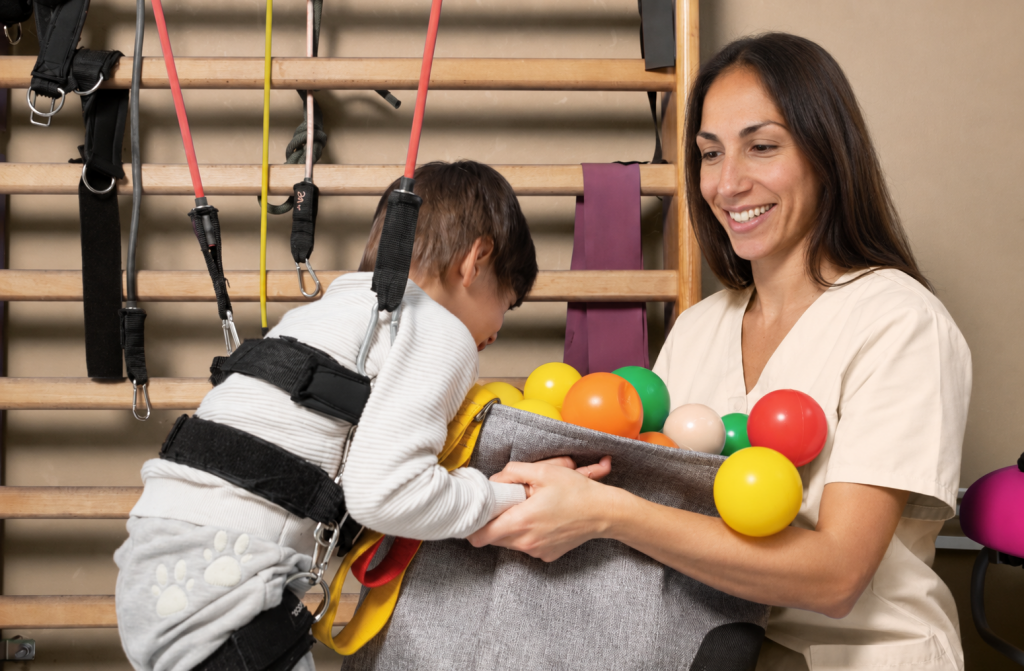
Another misconception is that therapy has to feel clinical. For children, therapy often works best when it is built into play and routine. Reaching for a favourite toy, moving to music, practising balance while playing a game, helping with dressing, standing at a kitchen surface, or changing position during story time can all become part of a therapy approach when done safely and with purpose. The child may not experience it as ‘exercise’, but their body is still practising important skills.
My background as an athlete has taught me the value of discipline and consistency, but working with children has taught me that motivation, trust and enjoyment are just as important. If a plan is too difficult, too boring or too much for family life, it will not last. The best plan is the one the child can engage with and the family can realistically continue.
QAre there small things families can do between visits?
Yes, and very often small things done consistently make more difference than a long routine that feels impossible to maintain. Families do not need to become therapists, and no one should feel guilty if life is busy. The aim is to weave helpful movement and positioning into normal moments. Depending on the child’s needs and the advice they have been given, this might include changing position regularly, encouraging reaching during play, practising sitting balance, using supported standing, building short stretches into bath time, or giving the child time to try a movement before stepping in to help.
The important word is ‘safe’. Families should follow the individual plan they have been given and avoid forcing any movement that causes pain, distress or resistance. If something does not feel right, it is better to stop and ask. It is also helpful to notice patterns: Is the child more comfortable at a certain time of day? Do they avoid one side? Does a chair seem to work better in the morning than in the evening? Are transfers harder after school? These observations help me adapt the plan.
I also encourage families to celebrate the small wins. A few calmer minutes in a good position, a smoother transfer, a child reaching with more confidence, or a parent feeling more secure with a routine all matter. Progress in paediatric physiotherapy is often built through everyday repetition, patience and encouragement.
QHow do you keep therapy engaging for a child who finds it hard or boring?
The first step is to understand the child. What do they enjoy? What makes them laugh? What helps them feel safe? What do they avoid? Some children respond to music, some to sensory toys, some to favourite characters, some to movement games, and some need a calm and predictable approach with plenty of time to process. I try to follow the child’s lead and then gently place the therapy goal inside something that already matters to them.
For younger children, that might mean practising reaching through play, using songs for timing, turning balance work into a game, or using toys to encourage movement in different directions. For teenagers, engagement may look different. They may care more about independence, privacy, sport, music, technology, going out with friends or being able to manage part of their own routine. With teenagers especially, I try to involve them in the goal-setting. Therapy should not feel like something being done to them; it should feel like something that supports what they want from life.
I also pay attention to fatigue, pain and behaviour. If a child becomes upset or refuses, it is not simply ‘being difficult’. It may be communication. The activity might be too hard, too long, uncomfortable, overwhelming or not meaningful. My job is to adapt the approach, not push through at any cost. When therapy feels safe, playful and respectful, children are much more likely to participate.
QHow does your approach change as a young person moves towards adulthood?
As a young person grows older, the focus gradually shifts. In childhood, much of the work may be about development, comfort, safe handling, play, posture and family routines. As they move towards adulthood, we still care about all of those things, but we also think more about independence, choice, self-advocacy and long-term wellbeing. The questions become: What helps this young person take part in the life they want? What skills can they practise? What routines can they understand or manage? What equipment, support and environment will help them feel safe without taking away their dignity or independence?
This stage can be emotional for families. Parents and carers may have been managing everything for many years, and the transition to adult services can feel uncertain. I try to support that process early, not at the last minute. This may involve reviewing equipment, mobility, fatigue, pain management, exercise routines, community access, college or work goals, transport, personal care and communication needs. It also means listening to the young person directly wherever possible.
I want young people to have a voice in their own care. Some may communicate verbally, some through behaviour, gestures, expressions, technology or trusted people who know them well. However they communicate, their preferences matter. Moving towards adulthood should not mean losing warmth and support; it should mean building confidence, dignity and as much control as possible.
04 Equipment and adaptations
QHow do you decide what equipment or adaptations a young person needs?
Equipment decisions should always begin with the person, not a catalogue. I start by understanding what the young person can already do, what they are finding difficult, what the family and care team are worried about, and what goals matter most. Then I look at the body, the movement, the environment and the routine together. A piece of equipment may look suitable on paper, but if it does not fit the home, the carers cannot use it safely, or the young person refuses it because it feels uncomfortable, it will not achieve what we need.
During an assessment I consider posture, strength, balance, tone, range of movement, skin pressure, pain, fatigue, growth, transfers and safety. I also look at the practical side: doorways, floor space, bathroom access, bed height, family routines, school needs, transport, storage and who will be using the equipment. Where possible, I prefer the least intrusive option that gives the greatest benefit. Equipment should support independence and comfort; it should not make the young person feel more restricted than necessary.
Examples might include seating adjustments, mobility aids, standing support, hoists, slings, grab rails, sleep positioning, specialist chairs or advice about safer transfers. I often work alongside occupational therapists, wheelchair services and equipment providers, because adaptations need to be coordinated properly. Clear explanation and training are essential. Families and carers should know why the equipment is recommended, how to use it, what to watch for and when to ask for a review.
QWhat should families do if equipment is not working or has been outgrown?
Please tell us early. Families sometimes keep struggling because they worry they are making a fuss, but equipment that is outgrown, uncomfortable or unsuitable can create bigger problems over time. Warning signs might include red marks on the skin, increased leaning, the young person sliding or twisting, pain, refusal to use the equipment, transfers becoming harder, carers feeling unsafe, broken parts, unusual noises, or a chair or aid simply no longer fitting after a growth spurt.
It is important not to make unsafe adjustments without advice. I understand the temptation to improvise when a family needs to get through the day, but with equipment such as hoists, slings, wheelchairs or specialist seating, small changes can affect safety. Instead, make a note of what is happening and when. Photos can sometimes help, especially if a problem appears after the young person has been sitting for a while or during a particular transfer. Then contact Special People or the relevant equipment service so the issue can be reviewed.
Often there is a solution: an adjustment, a replacement part, a different size, a referral back to wheelchair services, an occupational therapy review, or temporary advice to keep everyone safe while a longer-term solution is arranged. Equipment should make life easier, safer and more comfortable. If it is creating stress, discomfort or risk, it deserves attention.
05 And finally
QWhat is the most rewarding part of your job?
The most rewarding part is seeing how small changes can transform a whole day for a young person and their family. From the outside, a smoother transfer, a better sitting position, a more comfortable night, or a child tolerating a new activity may look like a small achievement. But for the family living it every day, it can mean less pain, less stress, more confidence, safer care and more time to enjoy being together rather than constantly problem-solving.
Because I have worked as a support worker as well as a physiotherapist, I understand how much those everyday details matter. I know that families and care teams are often managing complex routines, emotions, appointments and practical challenges. When a recommendation makes something easier even slightly, it can lift pressure from everyone. I find that very meaningful.
I also love watching young people gain trust in their own abilities. It might be a teenager communicating their preference more clearly, a child reaching for something independently, a young person joining an activity they previously avoided, or a family saying, ‘This finally feels manageable.’ Those moments remind me why this work matters. Physiotherapy is not only about movement; it is about quality of life, dignity and possibility.
QWhat is one piece of advice you would give to a family just starting out with us?
My advice would be: be honest with us from the beginning, even about the things that feel small, messy or difficult to explain. You know your child better than anyone. You know what a good day looks like, what a hard day looks like, what helps them feel safe, what makes them anxious, what has worked before and what has not. That information is just as important as any clinical assessment.
Families sometimes feel they need to present everything perfectly or only talk about the biggest concerns. Please do not worry about that. Tell us about the morning routine that takes two hours, the chair your child refuses, the transfer that makes you nervous, the exercise plan that was too much, the school day that leaves them exhausted, or the worry that keeps coming back at night. Those details help us build a plan that truly fits your family, rather than giving advice that sounds good but is impossible to use.
At Special People, the relationship with families matters. We are here to work alongside you, not to judge you. Progress may be quick in some areas and slow in others, and plans may need to change as your child grows. That is normal. Start with trust, keep communicating, ask questions, and remember that your child is not defined by their needs. They are a whole person with strengths, preferences, personality and potential, and our job is to support them with care, respect and hope.
“Your child is not defined by their needs. They are a whole person with strengths, preferences, personality and potential.”